What is Shoji Paper?
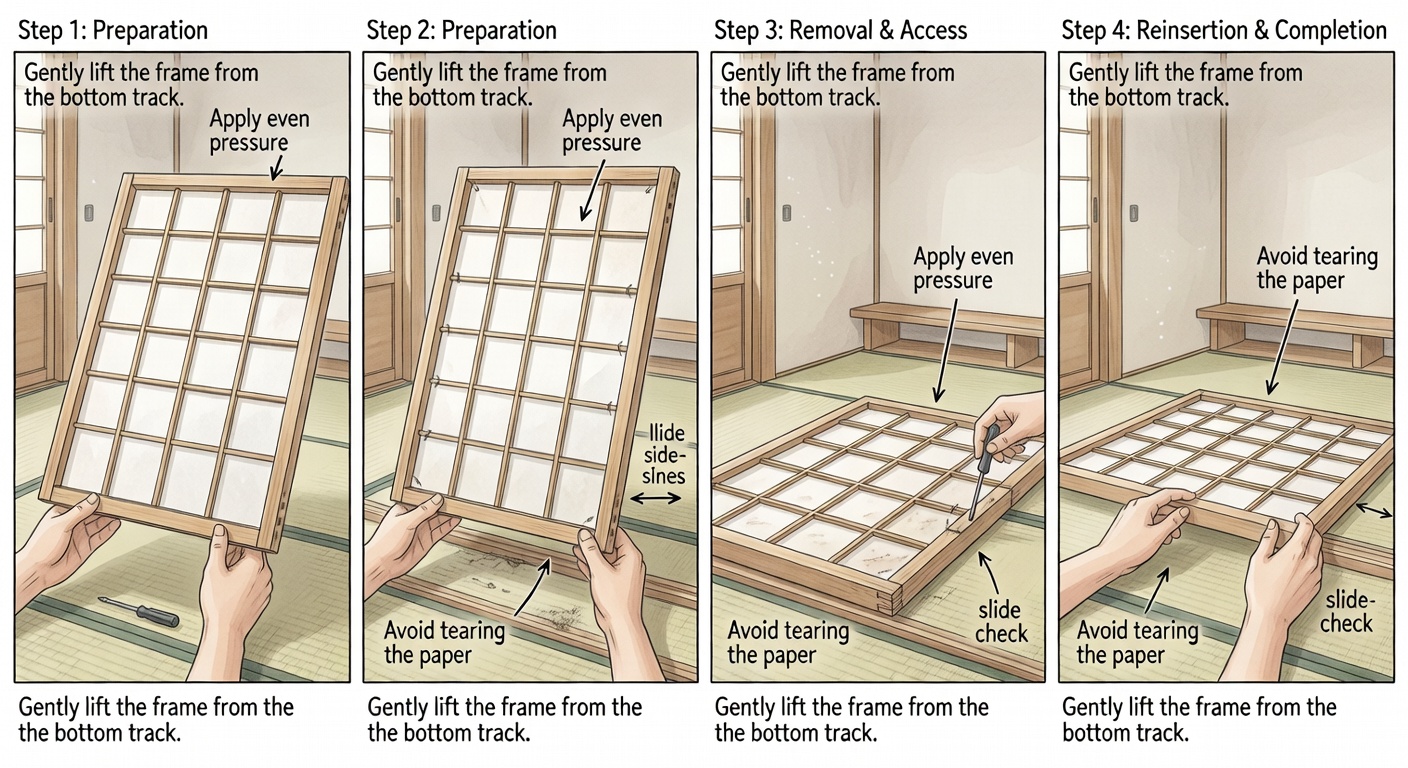
Carefully lifting the Shoji frame from its upper groove before replacement begins.
Shoji (障子) are traditional Japanese sliding screens consisting of a wooden lattice frame covered with translucent Washi paper. They filter natural light beautifully while maintaining privacy — a defining feature of washitsu (Japanese-style rooms).
The paper is made from fibres of the kozo (paper mulberry) plant. It is naturally strong, breathable, and surprisingly forgiving during replacement — as long as you take your time and follow the correct steps.
Why Replace It?
Shoji paper typically lasts two to five years under normal conditions. Replacement becomes necessary when:
- Tears, holes, or punctures appear (common in homes with children or pets)
- The paper yellows or becomes visibly dirty beyond cleaning
- Bubbles or lifting edges develop near the frame joints
- The paper has absorbed too much humidity and warped unevenly
- You are refreshing the room for a special occasion or seasonal change
In Japan, Shoji paper was traditionally replaced each autumn — just before the long season of indoor living. Many households still follow this rhythm, combining the task with a general autumn cleaning of the room.
Choosing the Right Paper
Standard Washi (和紙)
Traditional Washi is the most authentic choice. It offers a warm, creamy translucency and feels correct in an older home. Affordable but tears relatively easily — may last only one to two years in a busy household.
Reinforced Washi with Core Fibres
Modern Washi sheets incorporate polyester fibres within the traditional paper structure. This dramatically increases tear resistance while preserving the natural appearance. An excellent choice for most households.
Pre-Glued Rolls (Yukinko-type)
Pre-glued rolls are ideal for beginners. The adhesive is pre-applied along the edges, activated with a warm iron after positioning. The result is clean and consistent — perfect for a first attempt.
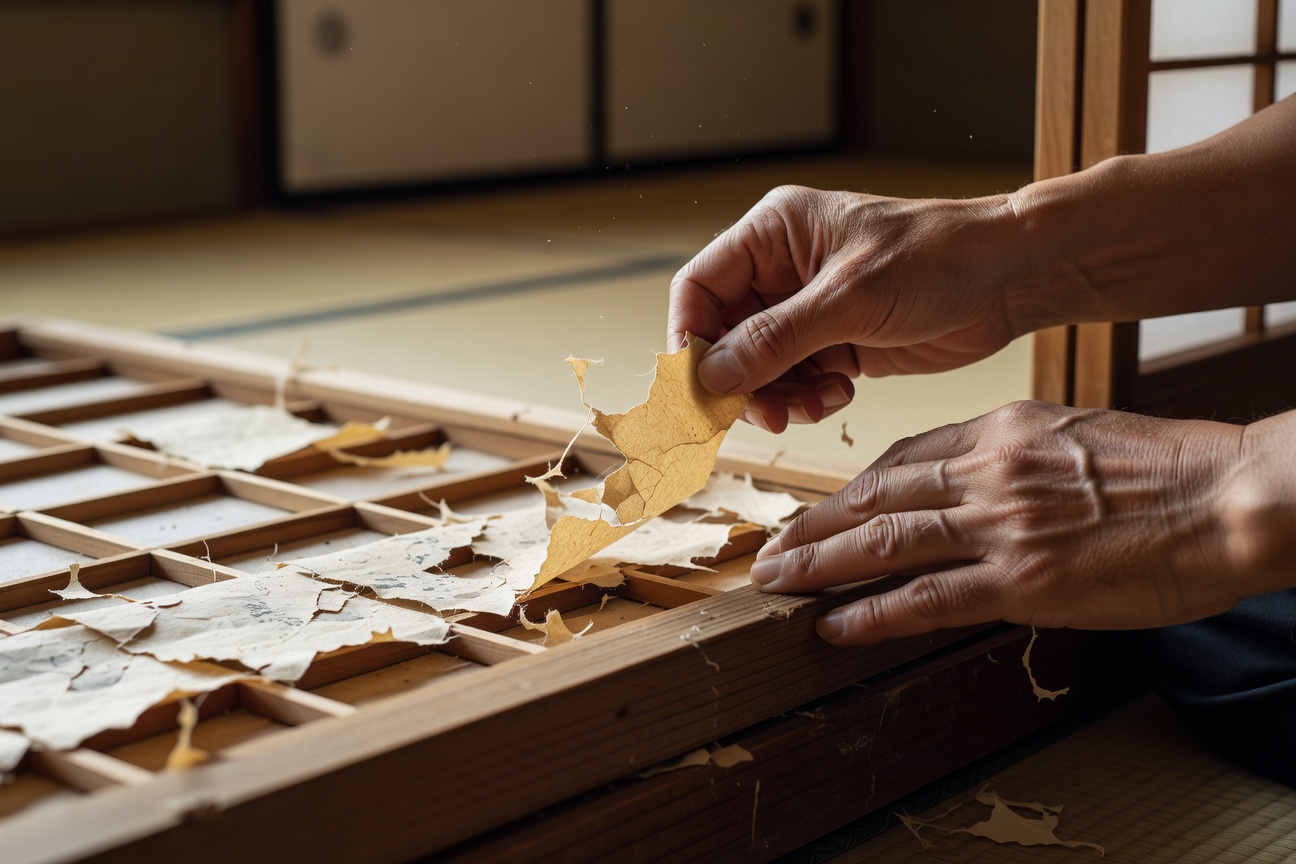
Dampening old paper with a fine water spray makes peeling clean and easy — without scratching the frame.
Removing the Frame
Shoji frames slide in grooves (shikii below, kamoi above). To remove:
- Push the panel firmly upward into the upper groove (which is deeper) to create clearance at the bottom.
- Swing the bottom of the panel toward you and lower it free of the lower groove.
- Lay the frame flat on a clean, dry surface — a smooth wooden floor works well.
Shoji frames are made from hinoki (cypress) or pine and can warp if stored on uneven surfaces. Always lay frames perfectly flat and avoid leaning them against walls for extended periods.
Removing Old Paper
The most painless method is moisture. Use a fine-mist spray bottle filled with clean water and lightly dampen the entire paper surface. Wait 30–60 seconds for the adhesive to soften, then peel back from one corner, working slowly and steadily.
Any remaining glue residue can be removed with a barely damp cloth, rubbing gently along the grain of the wooden frame. Allow the frame to dry completely (at least 2 hours) before applying new paper.
What Comes Next?
Once your frame is clean and dry, you are ready for the hands-on replacement process. For detailed step-by-step instructions, see: